Ethical Considerations When Adopting AI
AI-Powered Solutions ?? Comments 07/Dec/2025 SunAs AI-powered technologies become increasingly integrated into everyday life, it is essential to address the ethical considerations associated with their adoption. While AI can offer immense benefits in areas like energy management, financial planning, and climate impact reduction, users must ensure these tools align with ethical standards, particularly regarding data privacy, algorithmic transparency, and fairness. Below are practical steps to adopt AI responsibly while upholding ethical principles.
Practical Steps
-
Choose Platforms That Prioritize Data Privacy and Transparent Algorithms
o Data Privacy: When adopting AI-powered tools, ensure that platforms are committed to safeguarding your personal data.
• Look for tools and apps that use encryption to protect sensitive information, such as energy usage patterns, financial details, or location data.
• Review the platform’s privacy policy to understand how your data will be collected, used, stored, and shared.
• Choose platforms that minimize data collection to only what is necessary for their functionality. For example, apps like Joro and Mint explicitly outline how they handle user data and provide options for users to control what is shared.
o Transparent Algorithms: Ensure that the platform uses transparent algorithms that explain how decisions or recommendations are made.
• Platforms should provide users with clear insights into how their data is analyzed and how recommendations (e.g., energy-saving tips or financial advice) are generated.
• Avoid platforms that rely on "black-box" algorithms, where the underlying decision-making processes are hidden or difficult to understand. Transparency fosters trust and ensures users can evaluate the validity of the AI’s outputs.
-
Research the Ethical Standards of AI Providers Before adopting an AI tool, research the company or organization behind it to assess its commitment to ethical AI development:
o Check for adherence to industry standards, such as those established by the Partnership on AI or AI Ethics Guidelines developed by organizations like the European Union or IEEE.
o Investigate whether the company has a track record of ethical violations, such as data breaches, biased algorithms, or exploitative practices.
o Look for certifications or third-party audits that validate the company’s commitment to privacy, fairness, and transparency.
-
Be Aware of Algorithmic Bias AI algorithms are only as unbiased as the data they are trained on. When adopting AI tools, consider the following:
o Ensure the platform has measures in place to mitigate biases in its algorithms, especially in areas like financial planning or energy tracking, where biases could lead to inequitable outcomes.
o Choose platforms that disclose how their models are trained and what steps are taken to avoid reinforcing systemic inequalities.
-
Seek Platforms That Empower Users with Control Ethical AI platforms prioritize user autonomy by providing tools for customization and control.
o Look for apps that allow you to adjust settings, opt out of specific features, or delete your data if you decide to stop using the platform.
o Some platforms, like Sense or Google Nest Energy Dashboard, provide granular control over data collection, ensuring users can tailor their experience to align with their privacy preferences.
-
Avoid Platforms That Prioritize Profit Over Ethics Some AI tools may prioritize revenue generation over user well-being, using manipulative tactics like unnecessary upselling or sharing data with third parties for profit.
o Choose platforms that explicitly avoid monetizing user data without consent. For instance, many ethically designed apps avoid selling data to advertisers and instead focus on subscription-based revenue models.
o Be wary of "free" apps, as these often rely on data monetization to sustain their operations.
-
Evaluate Sustainability Practices of AI Providers Ethical AI adoption also includes considering the environmental impact of AI technologies. Training and operating AI models can require significant computational resources, which contribute to carbon emissions.
o Support companies that invest in renewable energy for their data centers or work to minimize the carbon footprint of their operations.
o Look for disclosures on the company’s sustainability initiatives and efforts to offset the environmental impact of their AI technologies.
-
Stay Informed About Evolving AI Ethics Standards The field of AI ethics is constantly evolving as technology advances. Stay informed about new developments, regulations, and best practices to ensure your adoption of AI remains aligned with emerging ethical standards.
Key Ethical Considerations for AI Adoption
-
Data Privacy: Users should have confidence that their data is secure, anonymized where possible, and used only for the intended purpose.
-
Algorithmic Transparency: Platforms must provide clear explanations of how their algorithms operate and make decisions, enabling users to trust and evaluate their recommendations.
-
Bias Mitigation: Ensuring that AI systems are free from bias promotes fairness and prevents inequities in outcomes.
-
User Empowerment: Ethical AI empowers users by offering them control over their data, recommendations, and the scope of the AI’s functionality.
-
Sustainability: Ethical adoption includes assessing the environmental impact of AI systems and supporting platforms that prioritize sustainability.
-
Accountability: AI providers must take responsibility for their tools, addressing errors or misuse and offering clear channels for users to report concerns.
By choosing platforms that prioritize data privacy, algorithmic transparency, and ethical practices, users can adopt AI technologies responsibly and with confidence, ensuring they align with personal values and societal standards.
• Example: A user switched to an AI tool with better privacy policies after researching potential risks.
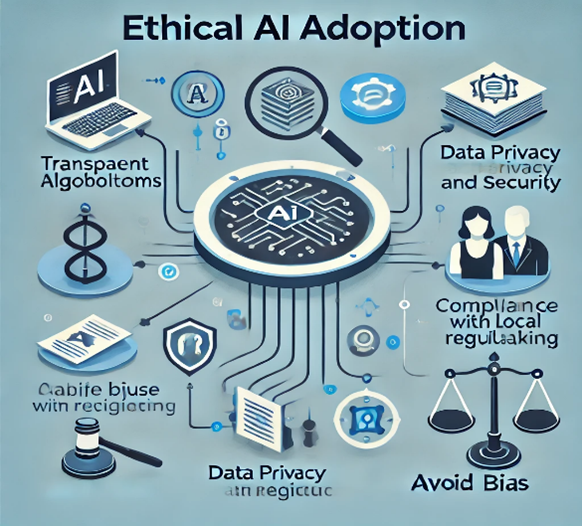
• Flowchart outlining key ethical AI adoption considerations.
o Choose platforms with transparent algorithms.
o Prioritize user data privacy and security.
o Verify accuracy of AI-generated recommendations.
o Ensure AI complies with local regulations.
o Avoid biases in AI decision-making.
Tags: AI technology ethics