Smart Grid Systems Explained
Green Technology ?? Comments 20/Oct/2025 MonSmart grid systems are transforming traditional power grids by integrating advanced digital technologies, renewable energy sources, and real-time communication. Unlike conventional grids, which operate in a one-way flow of electricity, smart grids enable two-way communication between utilities and consumers, improving energy efficiency, reliability, and resilience.
Details
-
How Smart Grids Work
o Two-Way Communication:
• Smart grids use sensors, meters, and communication networks to share real-time data between electricity providers and consumers.
• This bidirectional flow allows for more precise energy management, load balancing, and rapid response to changes in demand.
o Integration of Renewable Energy:
• Smart grids seamlessly integrate distributed energy resources (DERs), such as solar panels and wind turbines, into the grid.
• By accommodating variable energy production from renewables, smart grids enhance their reliability and reduce dependence on fossil fuels.
o Advanced Monitoring and Control:
• Smart grids use advanced monitoring systems, such as phasor measurement units (PMUs), to track grid performance and detect anomalies.
• Automated controls adjust energy flows to prevent overloads, reduce outages, and optimize energy distribution.
-
Key Features of Smart Grid Systems
o Demand Response Programs:
• Smart grids enable utilities to incentivize consumers to reduce energy usage during peak demand, preventing strain on the grid.
• For example, smart thermostats automatically adjust temperatures to conserve energy during high-demand periods.
o Energy Storage Integration:
• Batteries and other storage systems work with smart grids to store excess energy from renewables and release it during periods of high demand or outages.
o Real-Time Outage Detection and Restoration:
• Smart grids quickly identify outages and reroute electricity to minimize downtime.
• Automated systems restore power without requiring manual intervention, enhancing resilience during extreme weather events.
o Smart Meters:
• Smart meters provide consumers with detailed energy usage data, empowering them to make informed decisions about reducing consumption and costs.
-
Benefits of Smart Grids
o Improved Efficiency:
• Smart grids reduce energy losses during transmission and distribution by optimizing energy flows and balancing supply with demand.
o Enhanced Reliability:
• Advanced monitoring systems detect and address potential issues before they cause widespread outages.
o Support for Decarbonization:
• By integrating renewables, smart grids facilitate the transition to a low-carbon energy system.
o Cost Savings:
• Consumers benefit from lower energy bills through demand response programs, energy storage, and real-time usage data.
Practical Example
A Family Benefits from a Smart Grid During an Outage
• Scenario: A family lives in a suburban neighborhood with rooftop solar panels and a home battery system connected to a smart grid.
• What Happens During an Outage:
-
During a storm, a nearby power line is damaged, causing an outage in the area.
-
The smart grid immediately detects the outage and isolates the affected section to prevent further disruptions.
-
The family’s battery system, integrated with the smart grid, automatically switches to stored solar energy, keeping essential appliances like lights, the refrigerator, and communication devices powered.
-
As utility crews repair the damaged power line, the smart grid monitors progress and restores power to unaffected areas.
• Outcome:
o The family experiences no disruption in power supply during the outage, thanks to their stored solar energy and the smart grid’s automated response.
o The grid’s efficiency minimizes repair time and ensures electricity is quickly restored to the broader community.
Applications of Smart Grids
-
Community Microgrids:
o Smart grids enable the creation of localized microgrids that can operate independently during grid outages, providing resilience and stability.
-
Electric Vehicle (EV) Integration:
o Smart grids optimize EV charging by scheduling it during off-peak hours and using EV batteries as temporary energy storage during peak demand.
-
Remote Monitoring for Rural Areas:
o Smart grids extend reliable power to remote locations by detecting faults and managing energy flows efficiently.
Key Benefits of Smart Grid Systems
-
Energy Efficiency: Smart grids reduce waste by optimizing electricity delivery and reducing transmission losses.
-
Reliability and Resilience: Automated systems and real-time monitoring ensure rapid detection of issues, reducing the frequency and duration of outages.
-
Renewable Energy Integration: By accommodating variable energy production from solar and wind, smart grids accelerate the shift to renewable energy.
-
Cost Savings for Consumers and Utilities: Demand response programs, energy storage, and dynamic pricing models lower costs for consumers while reducing operational expenses for utilities.
-
Environmental Impact: Smart grids support decarbonization by increasing the efficiency of renewable energy use and reducing reliance on fossil fuel-based generation.
-
Empowered Consumers: Real-time data from smart meters allows consumers to monitor their energy usage, adjust habits, and save money on their utility bills.
By integrating renewable energy, improving efficiency, and enhancing grid reliability, smart grids play a critical role in modernizing energy infrastructure and supporting sustainable living.
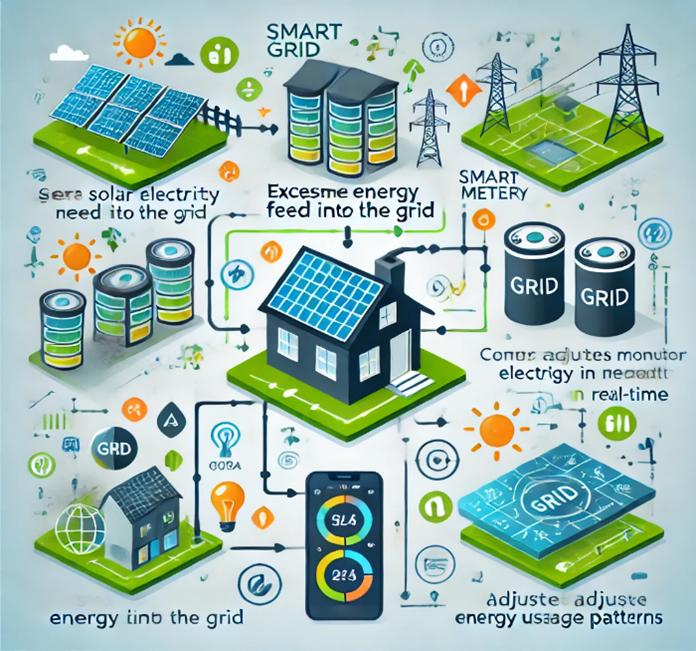
• Flowchart of how a smart grid operates in a residential area.
o Solar panels generate electricity and feed it into the grid.
o Excess energy is stored in batteries for later use.
o Smart meters monitor household energy consumption in real-time.
o Grid adjusts energy distribution based on demand.
o Consumers receive real-time updates and adjust usage patterns.
Tags: sustainability renewable energy green jobs upskilling